

Home battery storage
Three Tesla Powerwalls and a Gateway
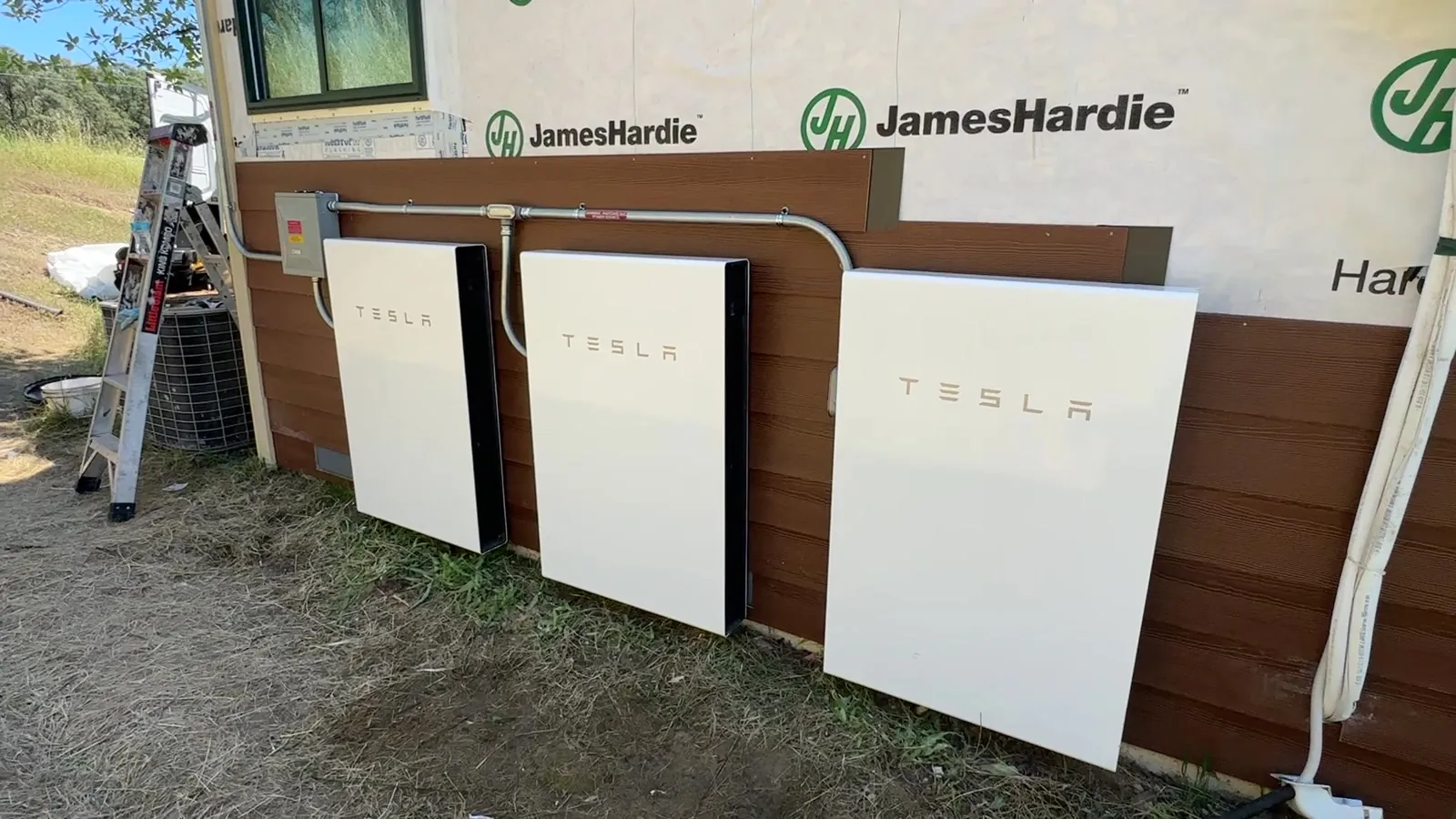
Menderix installed three Tesla Powerwalls side by side on an outside wall. We routed conduit along the siding before mounting the batteries and installed the Tesla Gateway by the home’s service equipment.
How three Powerwalls fit along the siding
Viewed from the end of the row, you can see how far the Powerwalls project from the siding and how much space there is between them. Short sections of conduit remain visible above the cabinets.
To see whether several batteries will fit, measure the available wall between doors, windows and existing equipment. Leave the final layout to the installer, who also needs to account for the connections and access for service.
The battery wall and the service equipment
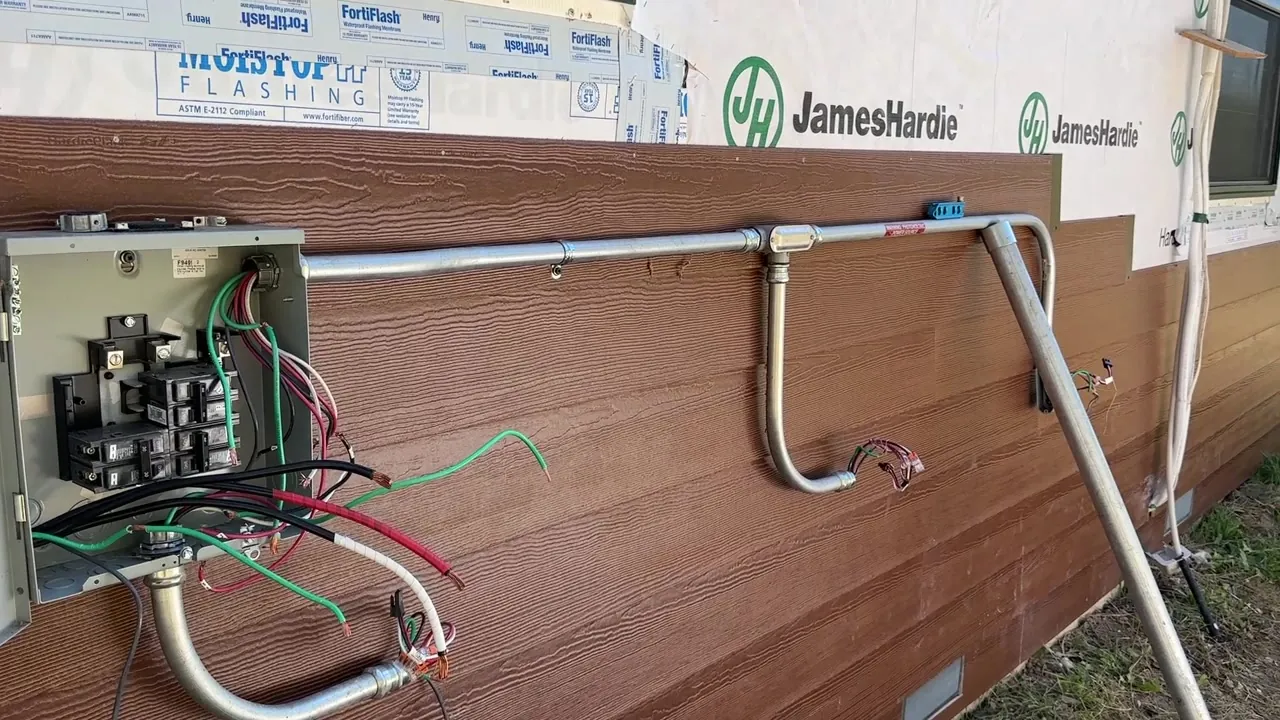
Conduit runs horizontally along the siding, then turns down behind the batteries. You can see this part of the route before the cabinets go up. The row of Powerwalls conceals much of it in the finished installation.
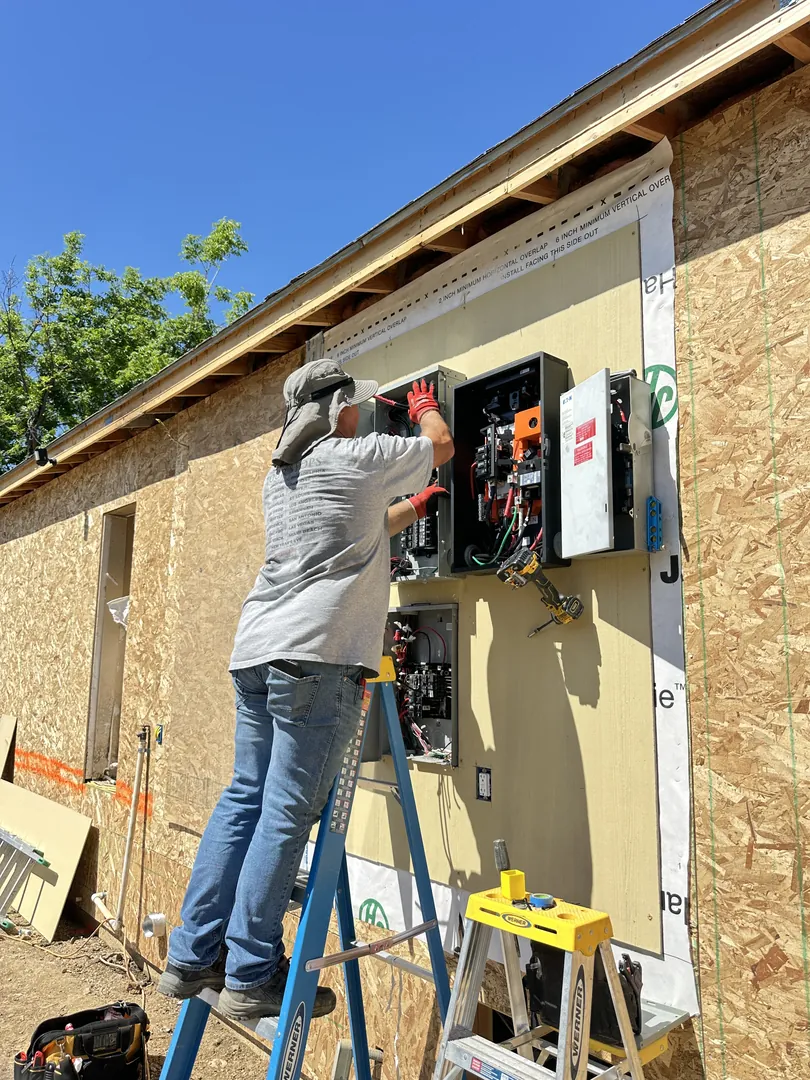
At the service equipment, the Gateway manages the connection between the Powerwalls, the grid and the circuits the system backs up. Planning those circuits starts with a list of what the homeowner wants to keep running during an outage.
Two decisions before choosing a Powerwall layout
What should stay on in an outage?
Start with the equipment you rely on when the power goes out, including loads that cycle on and off, such as a pump or refrigerator. The same three batteries could last very different lengths of time in two homes, depending on what each household runs.
Where can the equipment go?
Send a photo showing the whole proposed wall, a second view of the closed electrical panel and any existing solar equipment. Include gates, corners or narrow passages on the route between them. Those details help us decide what needs measuring during a site visit.
Would batteries fit your home?
Tell us what you want the batteries to do for you. You might need backup power for outages, want to use more of your own solar power at night, or draw less from the grid during peak-rate hours.