

Reduce or defer selected loads
Some equipment can run when solar production is available. Other loads, such as refrigeration or a necessary pump, may have little flexibility. The load plan should make the difference clear.
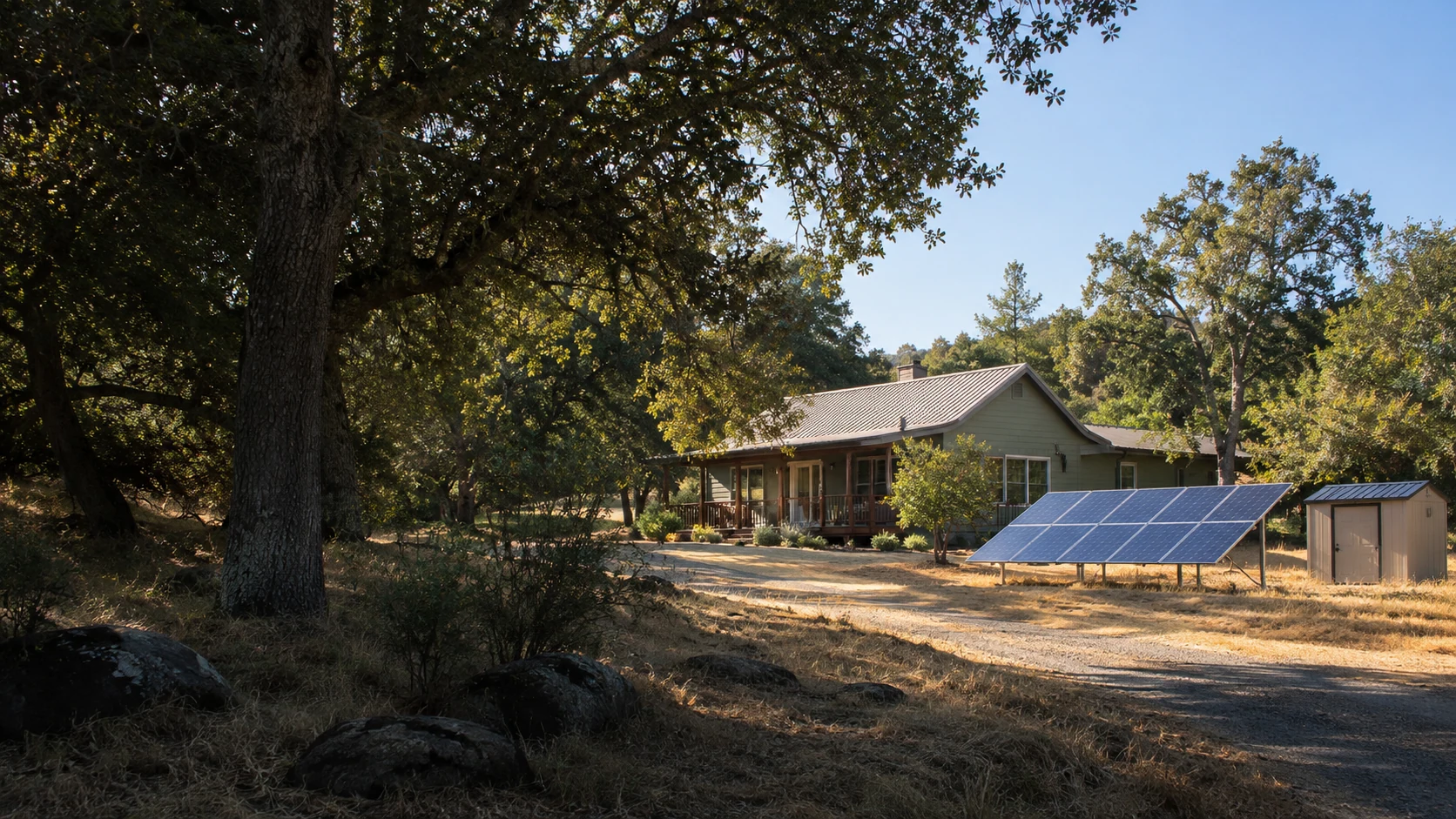
SACRAMENTO AREA / OFF-GRID POWER
A remote property needs enough energy through cloudy weather, not just on a clear summer day. Menderix plans off-grid solar systems around daily use, equipment starting loads and when you use the property. Solar, batteries and any backup generator need to work as one system.
Sacramento area · Monday–Sunday, 8 am–6 pm
BEGIN WITH THE LOADS
The refrigerator needs energy throughout the day. A well pump can demand a large burst of power when it starts. Both must be accounted for, but adding their nameplate numbers does not produce a complete design.
We start with the equipment you actually need to run and when you use it. Full-time living, weekend visits and seasonal agricultural use create different requirements. Electric heating, water heating and cooking can change the system size substantially. Identify essential loads first, then decide which other loads can wait when stored energy runs low.
DESIGN FOR THE HARD DAYS
An off-grid property cannot rely on the utility to make up a shortfall. The design needs to account for the season in which demand and available sunlight are hardest to balance.
| Design question | What it changes |
|---|---|
| How much energy is used each day? | The solar production and usable storage needed to support normal use. |
| Which appliances run together? | Inverter output and the ability to start motors or other demanding equipment. |
| How long must stored energy last? | The required reserve and the point at which another energy source becomes necessary. |
| What happens in the least sunny season? | Array sizing, seasonal operating expectations and the backup strategy. |
| Is the property occupied year-round? | Monitoring, freeze-sensitive loads, maintenance access and unattended operation. |
Battery capacity is not a guaranteed number of days of autonomy. Actual loads and operating conditions determine how quickly stored energy is used.
THE SITE MATTERS
A promising solar location may be a long way from the building it serves. Cable routing, trenching, terrain and access influence both the installation and its cost. We also look at seasonal shade and room to reach the array for maintenance.
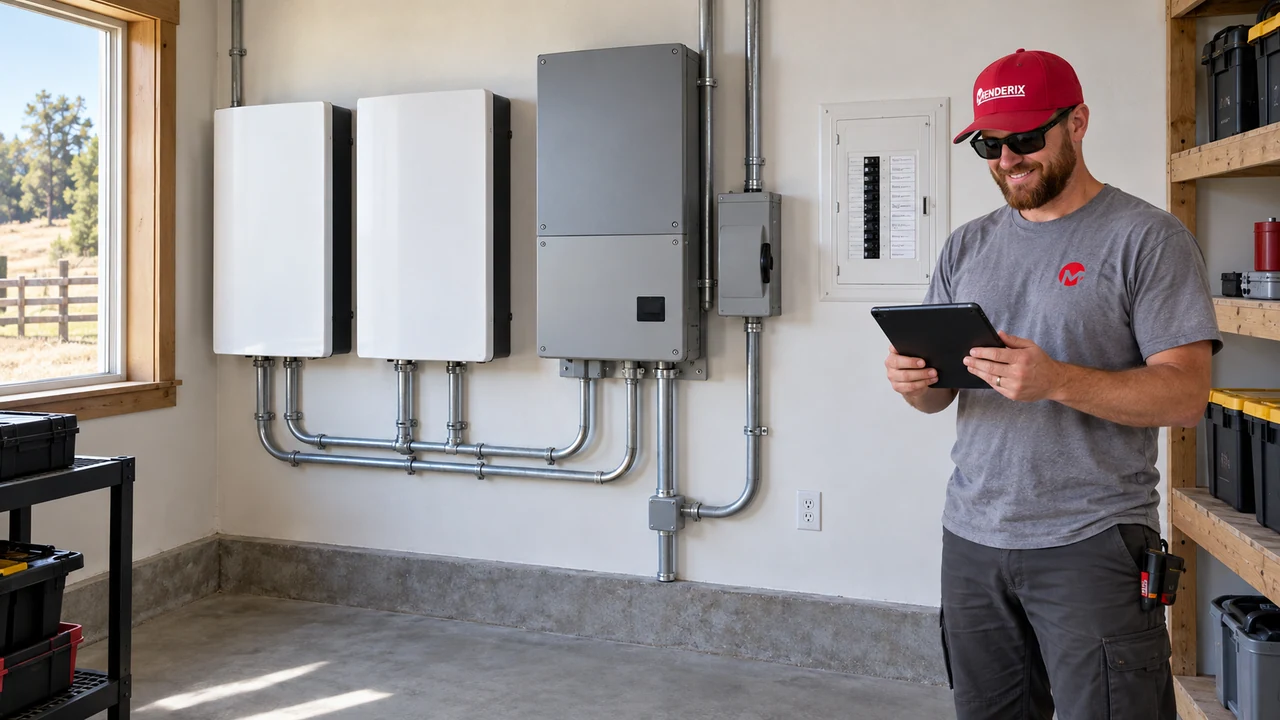
Batteries and inverters need a location that meets the equipment's installation requirements. Heat, weather exposure and access for servicing all matter. A remote site also needs a workable way to monitor operation and communicate a problem when nobody is there.
PLAN FOR A SHORTFALL
Backup should be a deliberate part of the design. It is harder to make those decisions after the batteries are nearly empty.
Some equipment can run when solar production is available. Other loads, such as refrigeration or a necessary pump, may have little flexibility. The load plan should make the difference clear.
Where a generator is part of the project, its starting behavior, charging capability, controls and fuel arrangements need to suit the system. The transfer equipment and charging controls must work together.
More capacity can change how often backup is needed, but it also changes cost and space requirements. Additional batteries alone do not solve a persistent shortage of solar production.
AFTER INSTALLATION
Understand which battery reading signals that discretionary loads should wait, and which alarms need attention. Settings depend on the equipment and the reserve strategy.
A new pump, workshop tool or electric heater can change demand enough to affect operation. Check the load plan before adding a large appliance.
Equipment must remain accessible, and the array needs a maintenance plan suited to the site. Generator service and fuel availability are separate ongoing responsibilities where one is used.
DESCRIBE THE PROPERTY
Send what you know now. Existing bills can help, but a new remote property may need a load list instead.
Tell us whether this is a full-time home, weekend cabin, workshop or seasonal property.
Include pumps, refrigeration, heating and any motor-driven equipment, plus model details when available.
Share the location, access conditions, possible array area and whether a generator already exists.
Before you book
Here are a few details to help you plan the work. Call us if your property or equipment needs a closer look.
No. A grid-connected backup system normally operates alongside utility service. A true off-grid system must meet the property's needs without that utility supply and requires a different load, storage and backup plan.
It can be designed for a suitable pump, but running demand and starting demand both matter. Share the pump's model and electrical information so its requirements can be included in the system design.
That depends on the loads, seasonal sunlight, storage and the level of reserve you need. A generator can provide another source during extended low production, but it is a project-specific decision.
Expansion may be possible after reviewing the inverter, batteries, controls and existing installation. New batteries or panels cannot be assumed compatible simply because their nominal ratings look similar.
Being disconnected from the utility does not automatically remove local building or electrical requirements. The project's jurisdiction and installation scope determine the approvals that need to be addressed.
Contact Menderix
Share the location, occupancy pattern and major appliances. If you already have solar, batteries or a generator, include the equipment models so we can discuss the system as a whole.