

Solar for a pump station
Solar power for a pump station
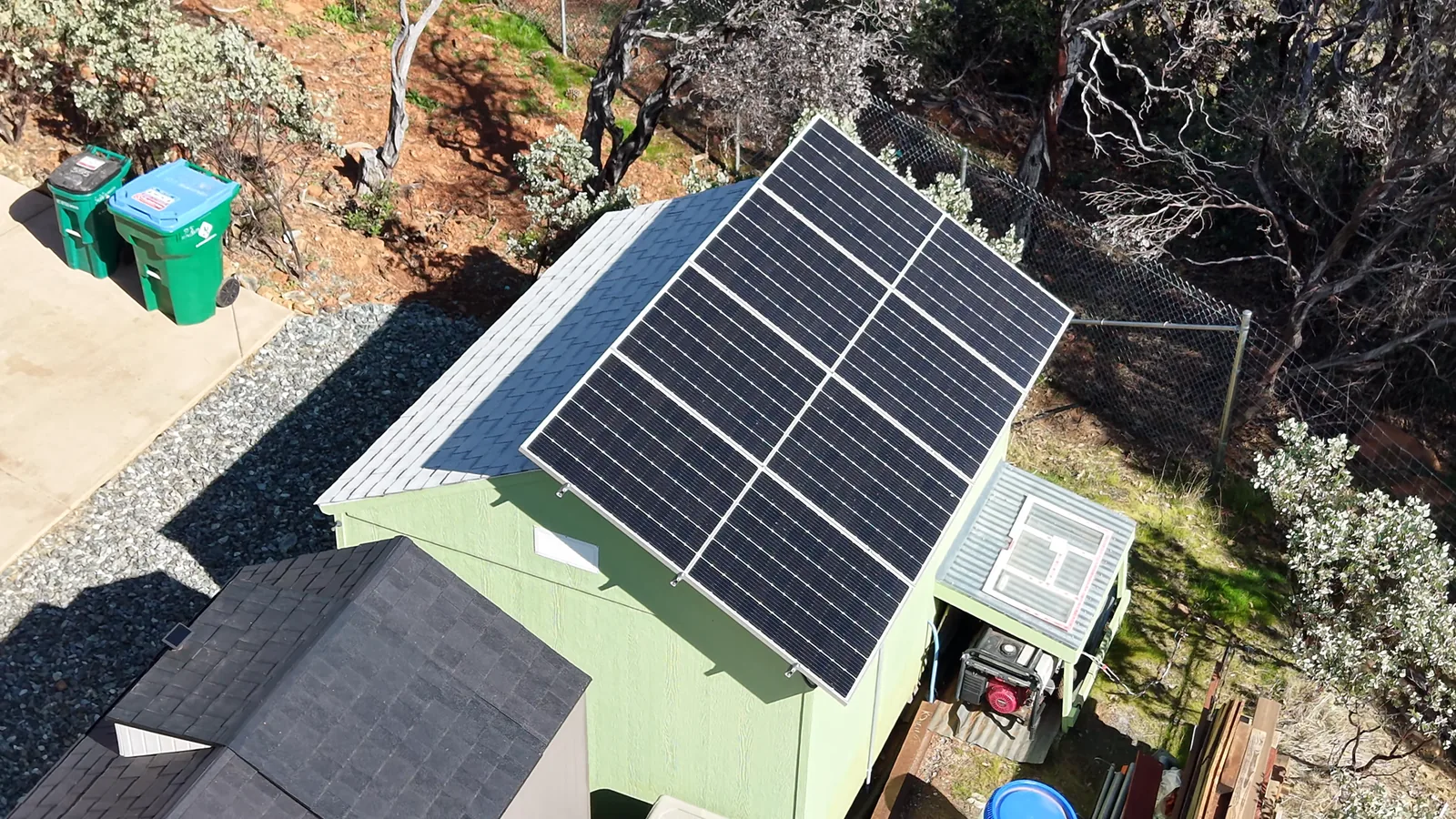
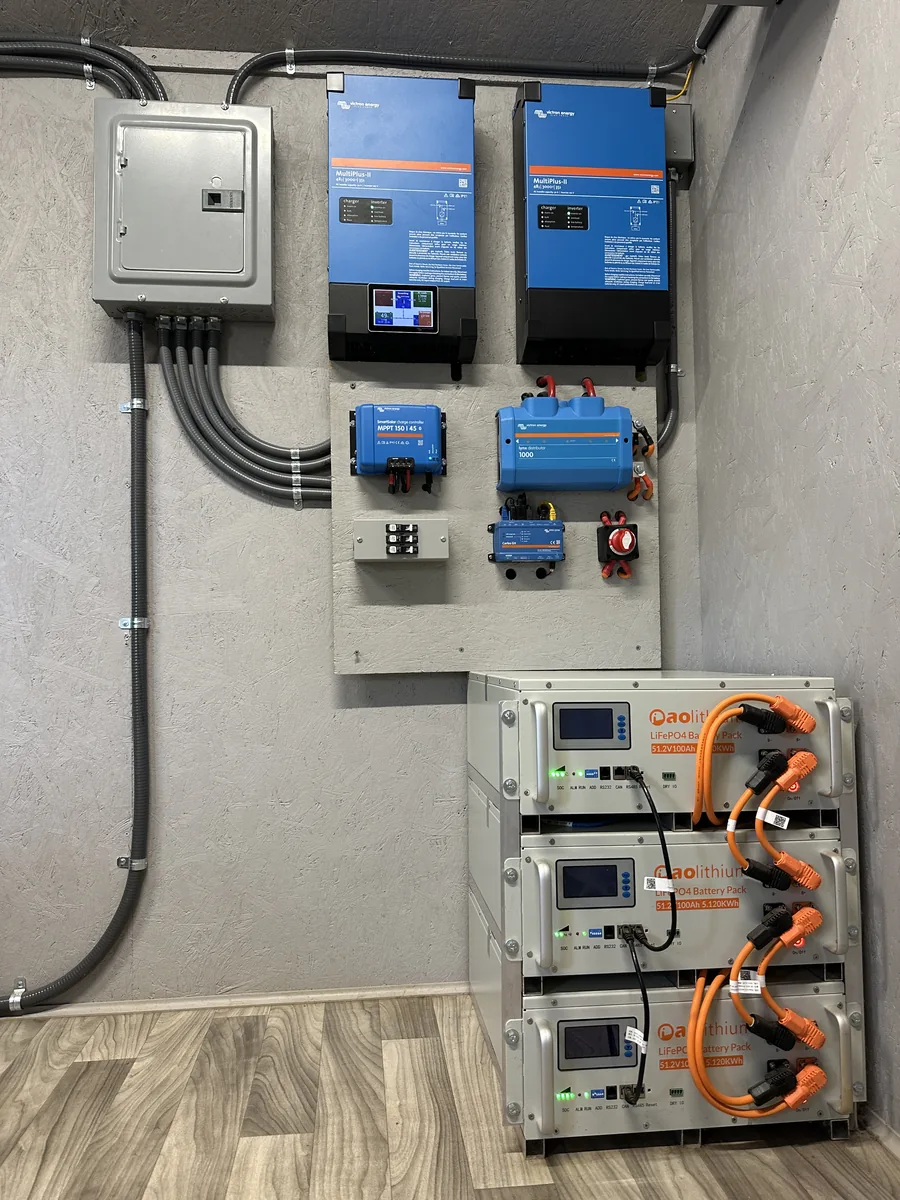
Menderix installed a 2 kW solar array on one side of the pump station roof. Inside the small building, two wall-mounted Victron inverters sit above a stack of three lithium iron phosphate batteries.
Inside the pump building
The two blue Victron inverters and their electrical connections share a board on the wall. The battery displays and connections face the room, so a technician can reach the front of each unit without moving the others.
Stacking the batteries saved floor space in the pump building. It also kept the area in front of the equipment clear for service.
From the workbench to the wall
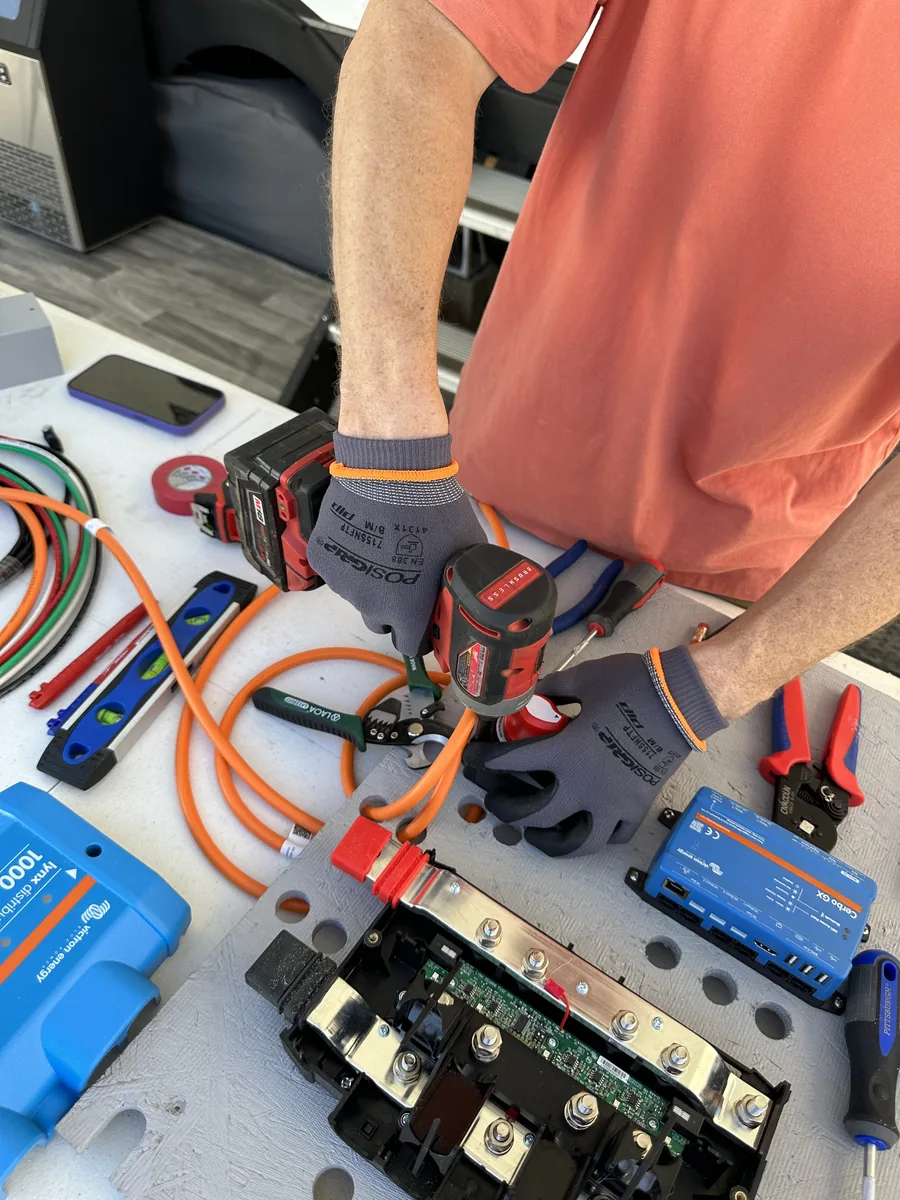
We laid out the components and cable entries on the workbench, then wired the board before mounting it inside the pump building.
The roof array is rated at 2 kW. The two Victron inverters are rated at 3 kW each, and the batteries store 15.36 kWh in total. To estimate how long they can run a pump, you’d also need to know the motor’s power draw and how often it runs.
What determines the size of a solar system for a pump?
Motor startup
A pump may briefly need much more power to start than to keep running. The motor nameplate, pump controls and other loads on the supply help establish what the inverter must be able to carry.
Hours of pumping
Estimate how many hours the pump actually runs on a typical summer day. If there are days when it runs much longer, tell us about those too. That difference in run time affects how much energy the system has to deliver.
When the water is needed
If you need water after dark, the system has to store enough energy for those pumping hours. Tell us how much pumping you can shift to daylight and how much has to stay on its current schedule.
Planning power for a pump or outbuilding?
Send the pump model, any available nameplate information and a description of the pumping schedule. Include a view of the building so we can discuss space for the array and equipment.