

Solar and battery storage
A 14.76 kW solar system with three EG4 batteries
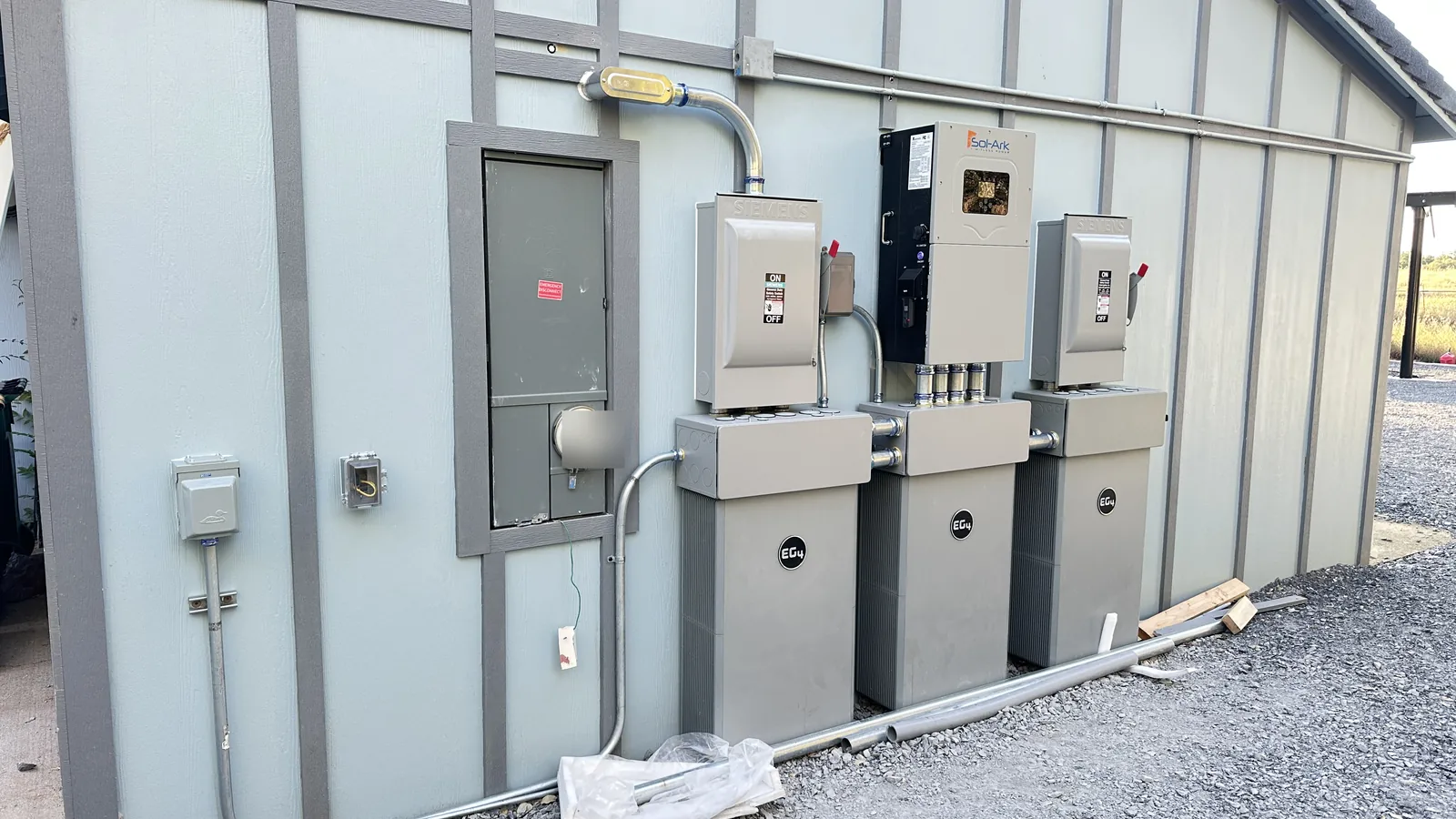
The equipment for this 14.76 kW solar installation runs along one outside wall. Three EG4 battery cabinets stand side by side on the gravel strip, with a Sol-Ark 15K inverter above the middle cabinet. Together the batteries provide 42.9 kWh of storage.
How the batteries fit against the building
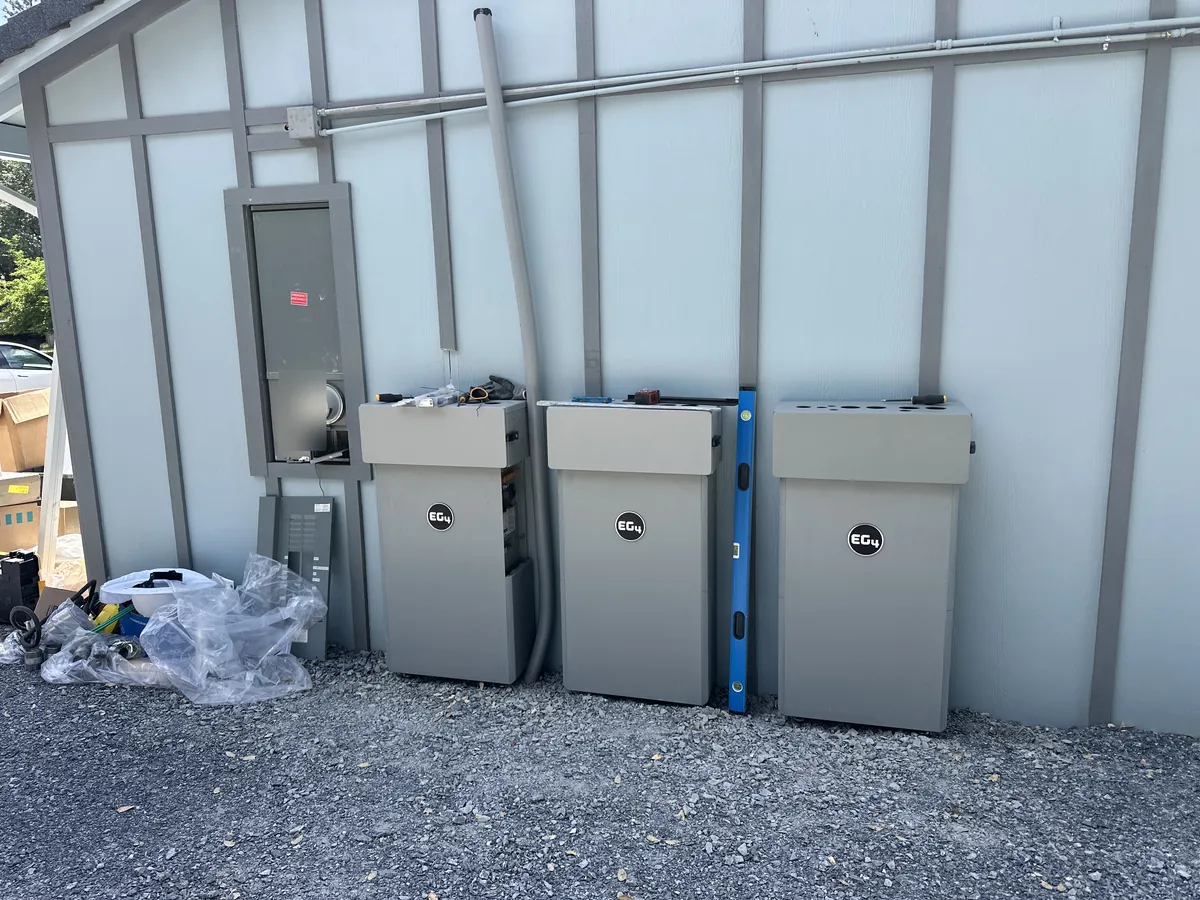
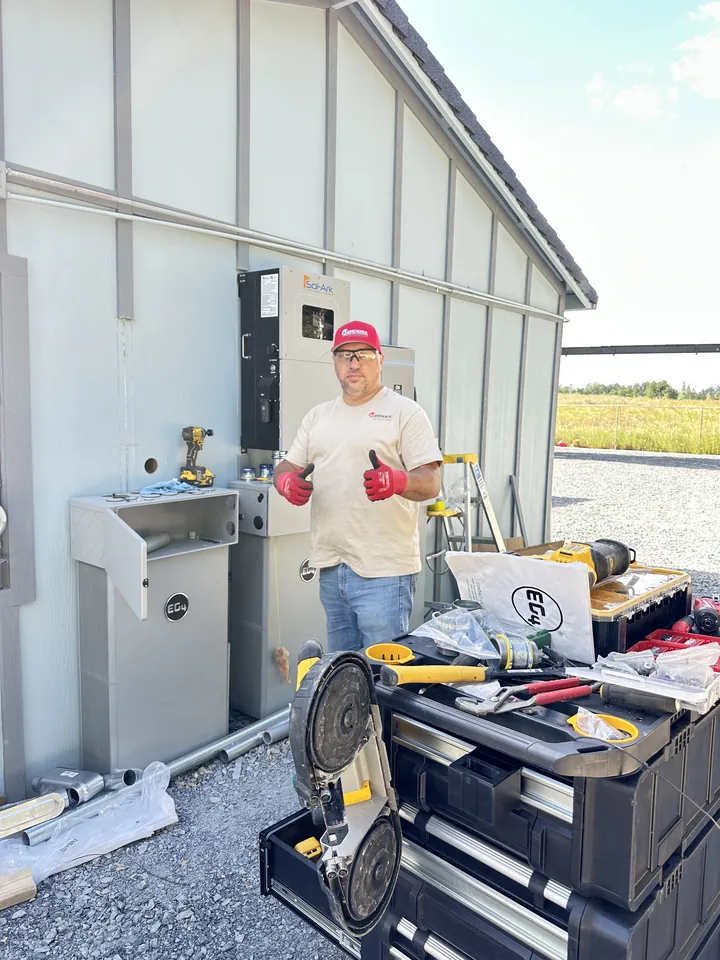
We set the three battery cabinets side by side on the gravel, with the doors facing away from the building. The Sol-Ark inverter went above the middle cabinet. That left space beside the inverter for the other electrical enclosures and their conduit.
When planning an outdoor battery installation, look at what’s in front of the wall as well as what’s on it. The installer needs room to open the cabinets, reach the controls and service the connections. A downspout, a gate or a narrow walkway can limit where the equipment fits.
Conduit connections beside the inverter
Short runs of metal conduit connect the enclosures beside the inverter. They follow the face of the metal building, with bends above and alongside the batteries. Those runs take up wall space beyond the width of the cabinets.
Together, the solar panels are rated at 14.76 kW. The batteries can store 42.9 kWh of energy. To estimate backup time, we’d also need to know how much of that energy is available when the outage starts and what you’ll be running.
What would 42.9 kWh mean at your property?
Which loads matter?
A refrigerator and lights draw power differently from a pump, heat pump or electric cooking equipment. Identify what should stay on and which large appliances can wait. We also need to know which loads may start together.
How much energy will be available?
A reserve setting may leave only part of the stored energy available for everyday use. During an outage, the starting charge, conversion losses and the equipment you run all affect backup time. If you want the panels to recharge the batteries while the grid is down, ask how the proposed system will handle that.
Discuss a solar and battery layout
A wide photo of the proposed equipment area is more useful than a close-up of the siding. Include nearby doors and paths, the location of the service panel and any existing solar equipment.